
Take-on and take-off stones
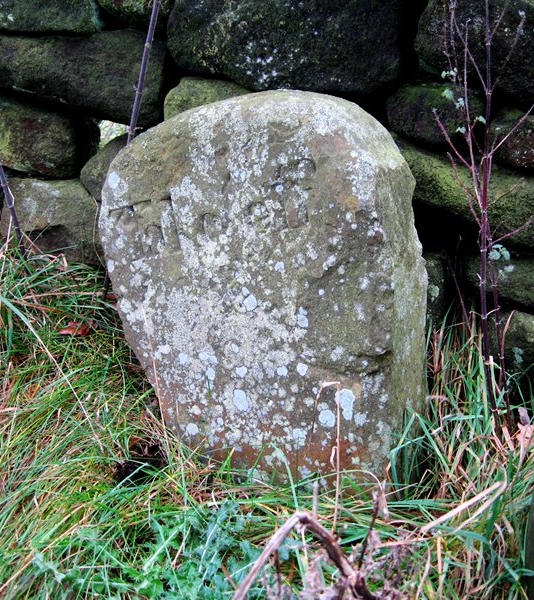 A take-on stone is a stone instructing a coachman to add an extra horse or horses to a conveyance in order to help pull the coach up a steep hill. A take-off stone, conversely, is an instruction to unhitch the horse(s). Such stones are few.
There are supposed to be three such stones surviving on Mortimer Road, on the moors above Bradfield, near Sheffield. This road leads from Penistone to Grindleford in the Derbyshire Peak District. Turnpiked from earlier packhorse routes, it was a financial failure, and its fascinating story is told in a book by Howard Smith (1993). Its route is also traced on the Stocksbridge and District History Society website.
The take-off stone illustrated here is at the top of the hill just north of the Strines Inn, near the end of the West Riding stretch of the road.
Another such stone can be seen on a bridge near Haworth, with the words “Hang on”. See the picture from Geograph here.
These stones are also known, at least to the Milestone Society, as “horse stones”, and the horses themselves are also called “cock horses”. This term has applied to the children’s toy from as long ago as Tudor times, while the Banbury Cross nursery rhyme dates to the 18th century. Its use in our context, however, is more recent: the OED has its earliest usage as comparatively recently as the late 19th century. A quotation from The Field of 25th July 1891 reads “With no further use for the cock horse, we cast him off at the top of the hill”.
RWH / Oct 2015, rev June 2024
Take-on and take-off stones Read More »

 The concept of sanctuary, as a place where fugitives can be immune from arrest, dates back to the Bible (cf Numbers, 35), and was recognised in English law until abolished by James I in the 17th century. It was a way to protect people from the vagaries of mob justice. All churches could offer sanctuary within the actual church building, but there were over 20 churches in mediaeval England (including Beverley, Ripon and York in Yorkshire) which were able to provide a wider area of sanctuary.